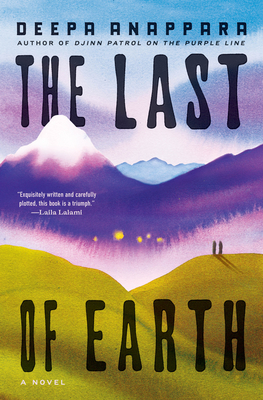
From the award-winning author of Djinn Patrol on the Purple Line comes a “thrilling and profound” (BBC) novel set in nineteenth-century Tibet that follows two outsiders—an Indian schoolteacher spying for the British Empire and an English “lady” explorer—as they venture into a forbidden kingdom.
“A riveting novel that takes on the hubris of exploration, the pursuit of immortality, and the abiding nature of love and friendship.”—Laila Lalami, author of The Dream Hotel
1869. Tibet is closed to Europeans, an infuriating obstruction for the rapidly expanding British Empire. In response, Britain begins training Indians—permitted to cross borders that white men may not—to undertake illicit, dangerous surveying expeditions into Tibet.
Balram is one such surveyor-spy, an Indian schoolteacher who, for several years, has worked for the British, often alongside his dearest friend, Gyan. But Gyan went missing on his last expedition and is rumored to be imprisoned within Tibet. Desperate to rescue his friend, Balram agrees to guide an English captain on a foolhardy mission: After years of paying others to do the exploring, the captain, disguised as a monk, wants to personally chart a river that runs through southern Tibet. Their path will cross fatefully with that of another Westerner in disguise, fifty-year-old Katherine. Denied a fellowship in the all-male Royal Geographical Society in London, she intends to be the first European woman to reach Lhasa.
As Balram and Katherine make their way into Tibet, they will face storms and bandits, snow leopards and soldiers, fevers and frostbite. What’s more, they will have to battle their own doubts, ambitions, grief, and pasts in order to survive the treacherous landscape.
A polyphonic novel about the various ways humans try to leave a mark on the world—from the enduring nature of family and friendship to the egomania and obsessions of the colonial enterprise—The Last of Earth confirms Deepa Anappara as one of our greatest and most ambitious storytellers.
About the Author
Deepa Anappara’s debut novel, Djinn Patrol on the Purple Line, was named one of the best books of the year by The New York Times, The Washington Post, Time, The Guardian, and NPR. It won the Edgar Award for Best Novel, was longlisted for the Women’s Prize for Fiction, shortlisted for the JCB Prize for Indian Literature, and included in Time’s 100 Best Mystery and Thriller Books of All Time. It has been translated into over twenty languages. Anappara is the co-editor of Letters to a Writer of Color, a collection of personal essays on fiction, race, and culture.
Praise For…
“Keralan-born author and former journalist Anappara is back following the huge success of her debut novel, Djinn Patrol on the Purple Line, which was named one of the best books of the year by The New York Times, The Washington Post and Time. . . . Set in 1869, [The Last of Earth is] a thrilling and profound tale of secret personal ambition set against the backdrop of colonialist expansion. . . . A proper page-turner.”—BBC
“A moving novel of exploration, friendship, and Himalayan history.”—Town & Country “Anappara pulls off a fresh mix of spooky folklore and intense naturalism. . . . An accomplished tale.”—Publishers Weekly
“The natural world looms large in The Last of Earth, with vivid evocations of the Himalayan landscape—shimmering lakes, distant peaks, remote villages, brutal storms. . . . With its dramatic setting and its two distinct main characters, The Last of Earth offers a story that will feel fresh to historical fiction readers.”—BookPage “Outlaws, spies, explorers, and colonialists all collide for a work as epic as its mountainous setting (and just as breath-taking).”—Crime Reads
“Set in nineteenth-century Tibet, The Last of Earth turns the colonial venture on its head—an Indian man mapping for empire, an English woman defying it. This tantalizing, polyphonic novel delves into the unknown, a bold, beautiful book that remaps both the world and the heart. Daring, poetic, and profound.”—Ruchira Gupta, author of The Freedom Seeker and I Kick and I Fly
“The Last of Earth rises before centuries of European fantasies about Tibet and unearths an expansive, untold story. Deepa Anappara has walked beyond the edges of history to craft this astounding and necessary novel.”—Tsering Yangzom Lama, author of We Measure the Earth with Our Bodies
“A riveting novel that takes on the hubris of exploration, the pursuit of immortality, and the abiding nature of love and friendship . . . Exquisitely written and carefully plotted, this book is a triumph.”—Laila Lalami, author of The Dream Hotel
“A suspenseful odyssey that will remake how its readers understand time, power, and love.”—V. V. Ganeshananthan, author of Brotherless Night
“This bold retelling of imperial adventurers crossing in disguise into mid-nineteenth century Tibet evokes the mesmerizing beauty and vastness of the Tibetan plateau to produce a stunning conclusion where both deliverance and repentance are untenable. The Last of Earth is an astonishingly gripping story.”—Tsering Wangmo Dhompa, author of Coming Home to Tibet
“An immersive journey . . . The Last of Earth is best read with a meditative-like attention to detail and rewards those who linger to appreciate its masterful evocation of time and place.”—Melissa Fu, author of Peach Blossom Spring
“A bold and expressive work of storytelling.”—Daniel Light, author of The White Ladder