Audiobooks


There are no products in your shopping cart.
| Items in the cart | |
|---|---|
| 0 Items | $0.00 |
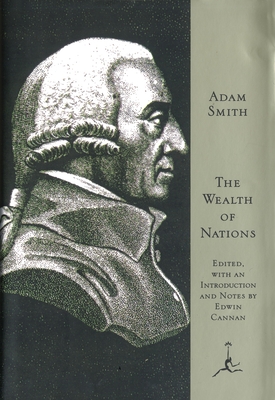
First published in 1776, The Wealth of Nations is generally regarded as the foundation of contemporary economic thought. Adam Smith, a Scottish professor of moral philosophy, expounded the then-revolutionary doctrine of economic liberalism. The book’s importance was immediately recognized by Smith’s peers, and later economists have shown an unusual consensus in their admiration for his ideas.
Combining economics, political theory, history, philosophy, and practical programs, Smith assumes that human self-interest is the basic psychological drive behind economics and that a natural order in the universe makes all the individual, self-interested strivings add up to the social good. His conclusion, that the best program is to leave the economic process alone and that government is useful only as an agent to preserve order and to perform routine functions, is now known as laissez-faire economics or noninterventionism.
In noting for the first time the significance of the division of labor and by stating the hypothesis that a commodity’s value correlates to its labor input, Smith anticipated the writings of Karl Marx. Like Marx’s Das Capital and Machiavelli’s The Prince, his great book marked the dawning of a new historical epoch.

140 Kentucky Street
707-762-0563
click for hours & info
140 Kentucky Street
707-782-0228
click for hours & info
138 N.Main Street
707-823-2618
click for hours & info
(Montgomery Village)
775 Village Court
707-578-8938
click for hours & info
104 Matheson Street
707-433-9270
click for hours & info
1300 First Street, Suite 398
707-252-8002
click for hours & info
1330 Lincoln Avenue
707-942-1616
click for hours & info
1200 4th Street
415-524-2800
click for hours & info
999 Grant Avenue
Suite 105
(415) 763-3052
click for hours & info