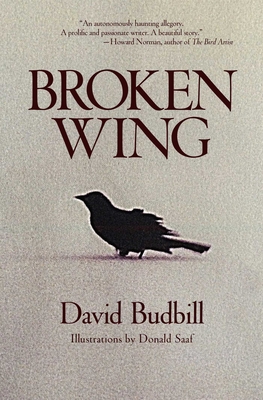
From acclaimed author David Budbill, Broken Wing is a posthumous novel celebrating solitude, nature, and the human spirit. Set in the deep woods of Vermont, this lyrical literary fiction follows a man who lives alone in the mountains and his unexpected journey to friendship with an injured black bird.
The man who lives alone in the mountains exists in solitude and simplicity. His days are spent tending his garden and observing wildlife. His nights are spent immersed in music, poetry, letter writing, and, most importantly, bird watching.
As November arrives and he prepares for winter, he discovers an injured black bird, which he names Broken Wing. Drawn to its spirit of survival and freedom, he forms a profound connection that sparks inspiration and friendship.
Both lyrical and reflective, Broken Wing offers a gentle mirror to the peaks and valleys of human existence and the rhythm of life. Against the backdrop of changing seasons, this nature-inspired fiction novel invites readers into a world of quiet observation, heartfelt insight, and poetic storytelling.
About the Author
David Budbill (1940–2016) is the author of eight books of poems, seven plays, two novels, a collection of short stories, two picture books for children, and the libretto for an opera. He also served as an occasional commentator on National Public Radio’s All Things Considered. He is well known for his play Judevine, which is centered on the lives of people who live in a fictional Vermont town—a place of great beauty and sometimes tough living. His honors include an Honorary Doctor of Humane Letters from New England College, a Guggenheim Fellowship in Poetry, and a National Endowment for the Arts Fellowship. David lived a humble, engaged, and passionate life in the green mountains of Vermont with his wife of 50 years, the painter Lois Eby.
Praise For…
“Like a parable from the New Testament, Broken Wing takes everyday events that all of us witness, and makes them a prism through which we can appreciate the richness and mystery of our lives.” — William Chafe, historian at Duke University and author of "Hillary and Bill: The Politics of the Personal," as well as numerous other books on modern America, civil rights, and feminism
“A man and a bird: the bird with a broken wing, the man himself also in need of healing. Such is the story of Vermont poet David Budbill's beautiful little novella Broken Wing. It is a fable of uncommon tenderness. And it is all the more poignant for having been completed by the author on his deathbed.” — Clemens Starck, award-winning poet and author of "Journeyman's Wages"
“An autonomously haunting allegory. A prolific and passionate writer. A beautiful story.” — Howard Norman, author of "The Bird Artist"
“In Broken Wing, David Budbill celebrates the forces of nature and virtues of solitude. And in a time of clutter and distraction, David reminds us of the beauty in our attentiveness to small tasks and in caring for other fragile lives.” — Bryan Pfeiffer, Vermont based biologist and ornithologist
“You need not be a bird lover or watcher to enjoy this book, but there’s a good chance you will love both birds and life more by its end.” — Larry Smith, New York Journal of Books
“David Budbill is a no-nonsense free-range sage.” — Dana Jennings, The New York Times
“The Man Who Live Alone in the Mountains, the well-named protagonist of this little gem of a book, is preparing his gardens and cabin for the winter when he notices a grackle at his feeders, standing its ground against the bullying blue jays. He enjoys the bird’s presence into late fall, thinking it is odd that he is still around, and then realizes that the reason he always sees the bird walking is that he has a broken wing. And as he studies the newly named Broken Wing, he also comes to the conclusion that the bird is not a grackle but a rusty blackbird, a much more elusive species. Thus begins poet David Budbill’s lyric tale of a solitary man and a solitary bird as they make it through a harsh Vermont winter. This lovely, introspective story is an allegory of sorts, examining whether being alone is automatically lonely; the role of music as a balm to the wounded soul; the spare black and white winter and how man and bird cope; and finally how the connection of two lives can be all that matters. Birders will love the inclusion of a species not often seen and will appreciate how the bird’s rarity mirrors the rarity of The Man Who Lives Alone. Highly recommended.” — Nancy Bent, Bird Watcher’s Digest